Blog

Your blog category

Cloud vs edge vs quantum computing

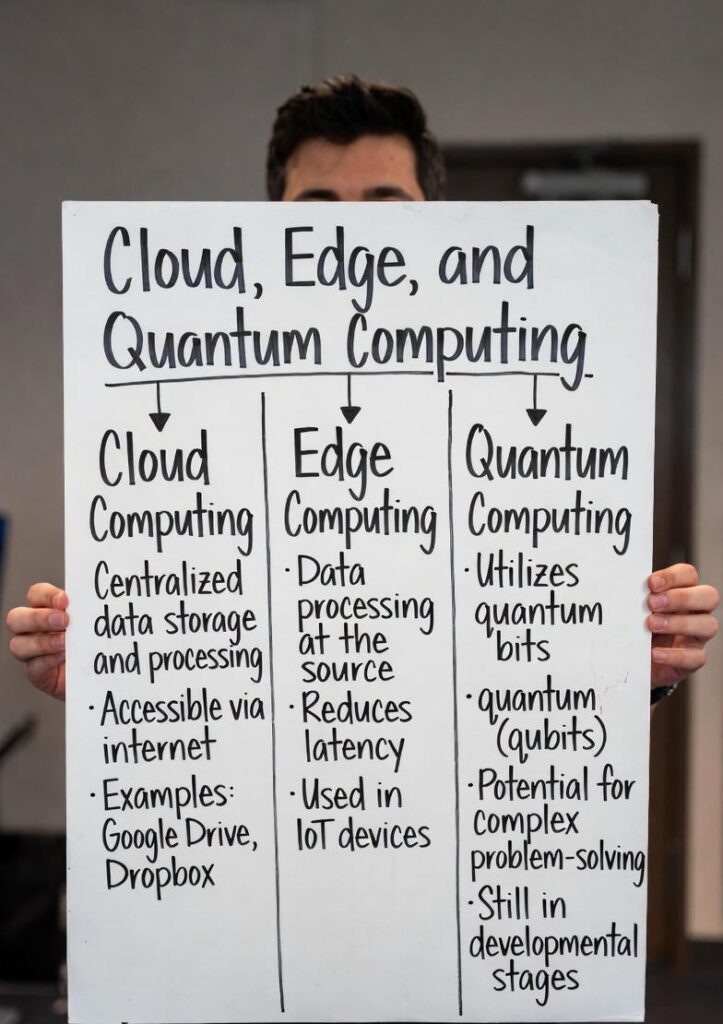
Cloud vs Edge vs Quantum Computing: The Computing Showdown Nobody Explains Well Your Netflix streams because servers somewhere pump data into your home. Your phone recognizes your face instantly without uploading anything. Quantum computers solve drug formulas in minutes that would take classical machines millennia. Three different computing paradigms. Three completely different problems they solve. Three futures colliding right now. The Cloud Computing Thing That Changed Everything Remember when companies stored everything locally? When your office needed its own servers, backup systems, IT staff managing physical hardware? Yeah. Those days died. Cloud computing basically moved computation to massive data centers miles away. AWS, Azure, Google Cloud. Billions spent building warehouse-sized facilities packed with servers. You pay monthly instead of buying expensive equipment upfront. The magic: unlimited scaling. Need more power? Click a button. Want to add storage? Done instantly. Software updates happen automatically. You focus on building products while someone else maintains hardware. It’s brilliant. The problem though? Data travels from your phone or sensor all way to the data center potentially thousands of kilometers away. Information gets processed in distant servers. Response time crawls compared instant local reactions. For Netflix? Totally fine. You buffering a few seconds means nothing. For a self-driving car? That delay kills people. For surgical robots? Unacceptable risk. Edge Computing Arrives To Fix Cloud’s Latency Problem Edge computing takes computation and shoves it right next door where data originates. Your IoT sensor doesn’t send raw data to the cloud anymore. It processes locally. Your autonomous vehicle doesn’t wait for cloud permission before stopping. It decides instantly using onboard computers. Your security camera analyzes video right there instead of uploading everything for cloud processing. The name comes from computing moving toward “the edge” of networks instead of staying centralized. Edge devices handle real-time decisions. Only summaries or important data travel to the cloud afterward. Amazon uses edge servers in warehouses. Tesla deploys edge processing across autonomous vehicles. Healthcare facilities run edge systems for patient monitoring. Nobody wants waiting for cloud response times when lives depend on immediate action. Here’s what makes edge powerful: millisecond response times without internet dependency. Process locally, stay secure, reduce bandwidth requirements dramatically. A surgical robot makes decisions based on local processing. No network lag. No cloud reliance. The catch? Edge devices have limited power compared cloud data centers. You can’t run massive machine learning models on every edge node. Scaling gets complicated. Managing thousands of edge devices beats managing one cloud center. Edge computing demands sophisticated engineering. You need smart devices. Reliable local processing. Fallback systems when connectivity fails. It’s harder than cloud but delivers performance cloud cannot match. Quantum Computing Isn’t Here Yet (But It’s Coming) Cloud and edge compute using classical bits. Zero or one. On or off. Boolean logic running everything. Quantum computers use qubits. Simultaneously zero AND one through superposition. They calculate multiple possibilities simultaneously instead sequentially. Different animals entirely. Here’s why people care: certain impossible problems become solvable. Drug discovery currently takes decades and billions. Researchers test millions of molecular combinations searching for compounds that work. Quantum computers simulate molecular behavior at quantum levels. Drug candidates emerge in months instead years. Cryptography relies on mathematical problems too hard classically. Quantum computers crack most modern encryption methods instantly. Financial institutions panic about quantum computing arriving before quantum-safe encryption deploys everywhere. Supply chain optimization involves finding best routes among infinite possibilities. Amazon warehouses handle millions of items daily. Classical computers approximate answers. Quantum computers find actual optimal solutions. Battery design for electric vehicles requires simulating complex material interactions. Tesla, BMW and others investigate quantum computing for developing better batteries. Longer range. Faster charging. Better safety. Financial modeling in milliseconds. JPMorgan and other trading firms already experiment with quantum algorithms. Processing complex market scenarios that classical computers cannot handle quickly enough. The honest truth? Quantum computing remains mostly theoretical. Google claims “quantum advantage” for specific benchmark problems. IBM, Microsoft, Rigetti and others build quantum systems. Real-world applications remain limited. Quantum computers also need extreme conditions. Near absolute zero temperatures. Perfect isolation. Massive infrastructure. They’re finicky and unreliable compared classical systems right now. But they’re advancing faster than most people realize. In five years? Ten years? Game changing technology emerges. The Comparison (Because You Need Context) Cloud computing handles massive data processing at scale. Netflix recommendations, Google searches, Instagram feeds. Excellent when latency doesn’t matter and you want infinite resources. Edge computing handles real-time decisions locally. Autonomous vehicles, surgical robots, industrial automation. Essential when milliseconds matter and you can’t depend on network connectivity. Quantum computing handles specific impossible problems. Drug discovery, cryptographic breaks, complex optimizations. Still experimental mostly but advancing rapidly. They’re not competitors. They’re complementary. Future systems combine all three. Your autonomous vehicle processes local sensor data through edge computing for instant reactions. Meanwhile it uploads anonymized patterns to cloud servers for analysis and model improvement. Sometime in future, quantum computing optimizes routing for entire city traffic simultaneously. Where These Careers Actually Lead Cloud engineers build infrastructure. ₹6-15 lakhs in India. $90k-$160k globally. High demand everywhere. AWS, Azure and Google Cloud certifications command premium salaries. Edge computing specialists still emerging as distinct role but growing rapidly. ₹7-18 lakhs locally. $100k-$180k internationally. IoT companies, automotive firms, industrial automation desperately hire these folks. Quantum engineers currently rare but increasingly sought. ₹8-20 lakhs in India. $120k-$250k+ globally if you’re genuinely skilled. IBM, Google, rigetti and startups compete aggressively for talent. PhDs get preferential treatment currently. Solutions architects design which computing approach solves which problems. ₹12-25 lakhs locally. $150k-$300k+ internationally. Deep expertise in all three makes you extremely valuable. Remote work opportunities explode across all three. Your location matters less than expertise. Indian engineers work for Silicon Valley companies, European banks and Australian startups without relocating. The Uncomfortable Truths Learning all three simultaneously guarantees overwhelm. They require different skillsets and mindsets. Cloud demands understanding distributed systems, containerization and infrastructure-as-code. Edge requires embedded systems knowledge, real-time processing and edge AI. Quantum needs quantum physics, quantum algorithms and linear algebra at advanced levels. Most developers pick one and go deep. Cloud engineering feels mature but competition intensifies constantly.

Cloud vs edge vs quantum computing Read More »
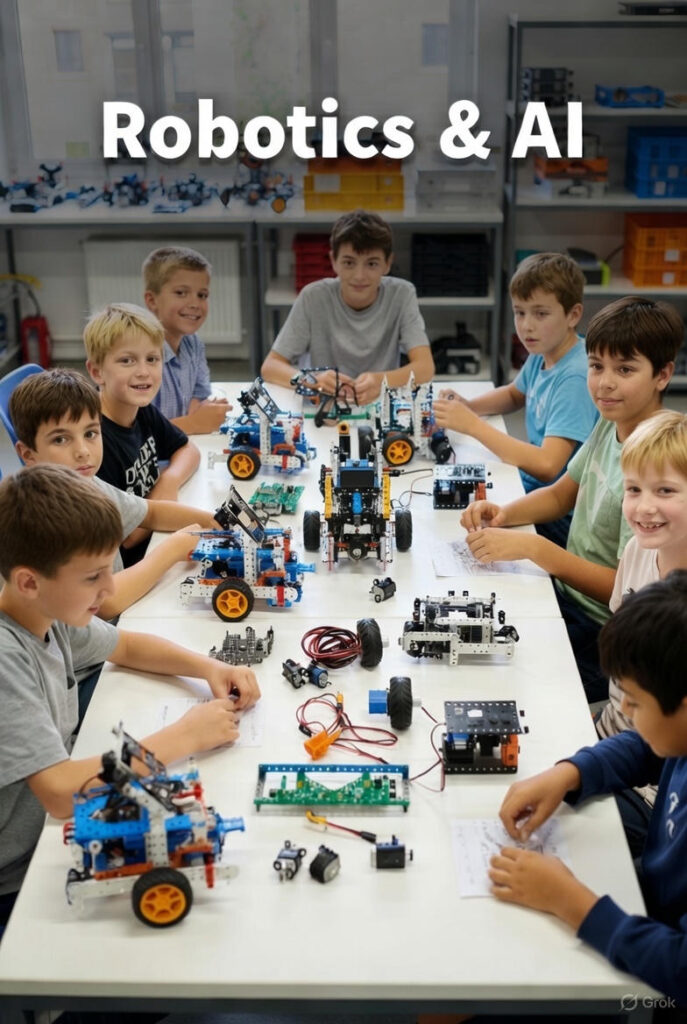
Robotics and AI

Robotics and AI: Machines That Actually Think Now (And They’re Taking Over Everything) Your Roomba is getting smarter. That surgical robot just performed your heart surgery with precision you couldn’t match in a million years. Robots are picking crops, defusing bombs, manufacturing Teslas and exploring Mars right now. But here’s what nobody talks about: AI didn’t just make robots faster. It made them think. The Wild Stuff Happening Right Now Five years ago robots were dumb. They followed scripts. You told them to grab part A, move it to position B, repeat forever. Done. Now? Robots learn from mistakes. They adapt when environments change. They make decisions without human input. Self-driving cars process sensor data instantly. Surgical robots predict problems before they happen. Factory robots recognize defects humans completely miss. About 4.4 million roboticists and AI engineers globally work on combining these fields and the numbers keep climbing fast. Entry-level robotics engineers in India start around ₹4-7 lakhs annually while experienced folks pull in ₹12-25 lakhs depending on what sector hires them. Globally? Expect $70k minimum and often way higher in developed countries. Companies like Tesla, Amazon, Boston Dynamics and Nvidia basically run on this stuff now. These aren’t experiments anymore. They’re shipping products, making profit and hiring aggressively. Where This Combination Actually Matters Manufacturing floors: Tesla’s assembly lines run mostly on AI-powered robots now. They adapt when materials vary slightly. Computer vision spots defects instantly. Production speeds accelerated dramatically without sacrificing quality. Hospital operating rooms: Surgical robots like da Vinci perform procedures through tiny incisions with impossible precision. AI analyzes thousands of previous surgeries to guide movements. Patients recover faster and survive complications more often. Warehouse chaos: Amazon Robotics handles millions of packages daily through automated systems. Robots navigate packed spaces, pick items accurately and optimize delivery routes in real time. No human could match that efficiency. Crop fields: AI-powered farming robots identify individual weeds and spray only those plants. Chemical usage dropped significantly. Harvest robots pick fruits without bruising them. Labor shortages stopped crushing agricultural productivity. War zones and disaster areas: Autonomous drones scout dangerous terrain. Ground robots carry supplies and handle explosives. No humans need entering hazardous areas first. Senior care facilities: Companion robots interact with elderly patients. They understand speech, recognize faces and remember preferences. They remind people about medications without being annoying about it. The pattern is obvious. Wherever humans face danger, boredom or physical impossibility—robots with AI show up and handle it. What Makes AI + Robotics So Absurdly Powerful Traditional robots were basically elaborate vending machines. Push the button, same thing happens every time. Boring. Inflexible. Useless without reprogramming. AI changes everything. Here’s how. Real-time decision making: Robots process sensor data and decide instantly without asking permission. Autonomous vehicles analyze traffic, predict pedestrian behavior and choose routes. No delays. No second-guessing. Learning from experience: Machine learning algorithms watch performance and improve continuously. Robotic arms figure out optimal motion sequences through trial and feedback. They get better at assembly tasks without anyone teaching them. Vision that actually works: Computer vision lets robots interpret what they see. Quality control robots spot defects 99.9% of the time. Autonomous vehicles read street signs and detect obstacles. Robots recognize objects they’ve never encountered before. Understanding language: Natural language processing means robots hear “grab the red box” and understand it. Companion robots maintain conversations. Service robots take complicated instructions without needing a manual or programmer. Predictive maintenance: AI analyzes sensor data and predicts failures before they happen. Factory equipment stays running instead of breaking mid-shift. Downtime practically disappears. The difference matters enormously. AI transforms robots from tools into collaborators. The Career Goldmine (Because You’re Exploring Options) This field is hiring like crazy across every continent. Salaries reflect that. Robotics engineers design systems and earn ₹8-20 lakhs in India while pulling $90k-$150k internationally depending on experience level. Boston, San Francisco and Singapore pay absurdly well. AI specialists focused on robotics command premium salaries. ₹10-25 lakhs locally. $100k-$200k+ globally if you’re genuinely skilled. Software engineers building robot brains earn comparable rates. Skills in C++, Python and computer vision matter tremendously. Mechatronics engineers blend mechanical, electrical and programming expertise. ₹5-18 lakhs in India with strong international demand. The best part? Remote work opportunities exist extensively. Your location matters less than your ability. Research roles at universities and companies push boundaries and pay well. ₹6-22 lakhs entry through senior levels. PhDs get preferential treatment. Healthcare robotics specialists earn top dollar because surgical precision is worth millions when lives depend on it. Manufacturing roles stay steady and reliable. Autonomous vehicle companies hire desperately and pay competitively. The Uncomfortable Truths (Yeah There Are Some) Learning this stuff simultaneously requires understanding robotics AND AI. That’s basically two PhDs worth of knowledge compressed together. You need strong programming skills. C++ handles performance-critical code. Python prototypes quickly. Understanding algorithms matters. Machine learning isn’t magic—you need solid math foundations. Hardware logistics complicate everything. Robots break down. Sensors fail unpredictably. Debugging a robot that’s three miles away gets frustrating fast. Ethical questions haunt this field constantly. Autonomous weapons raise concerns. Surveillance robots worry privacy advocates. Job displacement from automation angers workers. Who’s responsible when AI decisions hurt people? Nobody has answers yet. AI can be bizarrely brittle. A robot trained on summer conditions might completely fail during winter. Edge cases break systems unexpectedly. One weird input breaks years of training. Integration nightmares plague real-world deployment. Getting robots working together requires enormous coordination. Different manufacturers use incompatible standards. Getting legacy systems talking with new AI remains painful. How To Realistically Start Learning This Mess Don’t try learning everything simultaneously. That guarantees failure. Phase one: Pick your weapon. Choose C++ if performance matters (it does). Learn Python for rapid prototyping and AI work. Get comfortable with both. Phase two: Understand robotics fundamentals. Study kinematics, control systems and basic mechanics. Build something physical. A wheeled robot following lines teaches more than reading textbooks. Phase three: Tackle machine learning properly. Linear algebra and calculus support this stuff. Study neural networks, reinforcement learning and computer vision gradually. Practice on

Robotics and AI Read More »

C++

C++ Isn’t Dead. It’s Actually Running Your Life Right Now. Ever wonder what code is humming inside your PS5 when you’re grinding through Fortnite at 2 AM? Probably C++. What about that Tesla auto-pilot that just navigated you through traffic without breaking a sweat? Also C++. High-frequency trading algorithms moving billions in microseconds? Yep. C++ again. But here’s where it gets weird. Everyone thinks C++ is some ancient dinosaur language that died with Windows 95. Couldn’t be more wrong. The Numbers Don’t Lie About 4.4 million developers worldwide code in C++ every single day and that number keeps climbing. Meanwhile C++ devs pocket around $103k annually in the US (sometimes way more if you’re good). In India you’re looking at roughly ₹7-12 lakhs depending on experience level and which city you’re based out of. That’s not chump change. Companies like Google, Microsoft, Bloomberg and JPMorgan Chase literally cannot function without C++. SpaceX uses it for rockets. NASA deployed it on Mars rovers. Nvidia’s entire GPU stack gets built with C++. These aren’t side projects either. Why People Still Choose This Language C++ gifts you something most modern languages won’t: direct hardware access. You’re not abstracted away behind fifty layers of garbage collection and virtual machines. Your code talks straight to memory, processors and operating system resources. Want blazing speed? Use C++. Need predictable performance without random pauses? That’s C++. Building embedded systems for refrigerators, medical devices or spacecraft? Guess what they’re using. The language also traveled everywhere. Write once, compile for Windows, Linux, macOS, your toaster’s operating system. Dropbox and Spotify both built their core infrastructure with C++ for exactly this reason. Cross-platform compatibility without sacrificing performance remains unmatched. The Uncomfortable Truths Learning C++ sucks in the beginning. Memory management will haunt you. Pointers confuse newbies. Undefined behavior lurks around corners waiting to wreck your day. You’ll create dangling pointers and leak memory like crazy when starting out. Uninitialized variables sit there containing garbage bits instead of zeros. Off-by-one errors will make you question everything. Raw template error messages look like someone had a seizure on their keyboard. This stuff genuinely hurts. But—and this matters a ton—that pain teaches you how computers actually function at a fundamental level. Most Python or JavaScript developers never learn this stuff. They click around frameworks blissfully unaware of what their code really does under the hood. C++ rips that ignorance away and forces understanding. Where C++ Lives In The Real World Game development: Unreal Engine runs on C++. Massive AAA studios depend on it because rendering millions of pixels per second while simulating physics and AI requires extracting every ounce of performance possible. Quantitative finance: Microseconds literally equal money in trading. High-frequency trading systems process data in nanoseconds. C++ executables run circles around anything else available. Autonomous vehicles: Tesla and Waymo need real-time decision making at highway speeds without stutters or delays. C++ provides that rock-solid determinism. Robotics: Boston Dynamics’ humanoid bots move because of C++ code. Surgical robots need predictable behavior. Manufacturing automation depends on C++. Machine learning: TensorFlow, PyTorch and nearly every serious ML framework use C++ for the heavy computational lifting while Python provides convenient wrappers up top. The pattern emerges clearly. Whenever speed matters, whenever reliability matters, whenever your code literally can’t afford hiccups—C++ shows up. How To Actually Start Learning This Beast Stop watching YouTube tutorials and start coding immediately. First get yourself a compiler. GCC works everywhere. Clang compiles fast and gives readable errors. MSVC exists if Windows captivates you. All free. Second write a tiny program. Not “Hello World” (okay fine write that too). But then write a calculator. Build a number guessing game. Process some CSV file your brother gave you. Third learn the fundamentals without overthinking it. Variables, loops, functions, basic data structures. Get comfortable. Move on. Fourth dive into object-oriented concepts once basics stick. Classes, inheritance, polymorphism. These concepts matter because most real C++ codebases use them extensively. Fifth study modern C++ features. Smart pointers eliminate 90% of memory management headaches. Lambda functions simplify callbacks. The Standard Template Library offers containers and algorithms that save hundreds of hours annually. Skip the ancient C++ stuff. Nobody cares about raw new and delete anymore. Modern C++ treats you better. Mistakes You’ll Make (And How To Avoid Them) Mistake #1: Ignoring compiler warnings like they’re optional suggestions. They’re not. Treat warnings as your future bugs screaming for attention right now. Mistake #2: Manually managing memory with new and delete everywhere. Use std::vector, std::string and smart pointers instead. They handle cleanup automatically and prevent leaks. Mistake #3: Comparing versus assigning. That if (x = 5) accidentally modifies x instead of checking its value. Subtle. Devastating. Use if (x == 5) instead. Mistake #4: Assuming operations succeed without checking results. Files don’t always open. Network calls fail occasionally. Memory allocation sometimes can’t happen. Plan for failure. Mistake #5: Declaring variables without initializing them first. Garbage sits inside until you assign something. Explicitly initialize everything. Mistake #6: Object slicing through direct inheritance assignment. Use pointers and references when dealing with polymorphic classes. Career Stuff (Since You’re Exploring Options) C++ developers are in demand across every major tech hub globally. Learning this skill opens doors in multiple directions simultaneously. Game studios hunt desperately for experienced C++ programmers. Salaries run healthy in places like San Francisco, London and Tokyo. Remote opportunities exist widely too. Finance firms pay absurdly well. New York, London and Singapore see six-figure offers for capable C++ devs. Yes seriously. Autonomous vehicle companies need this skillset badly. Tesla, Waymo, Aurora and smaller startups constantly hire. Geography matters less when remote work happens. Embedded systems and IoT companies need C++ people across Europe, Asia and North America. Your credentials matter more than your zip code. Why This Language Refuses To Die Some folks predicted C++’s death for decades now. Didn’t happen. Won’t happen. As hardware gets faster, developers want languages that scale with it. Python’s too slow for critical applications. Java carries baggage that matters sometimes. Rust handles memory beautifully but hasn’t replaced C++ in established codebases. C++23 launched last year with legitimately useful features. Concepts make templates sane. Coroutines

C++ Read More »

The #1 Skill Students Must Learn in 2025: Mastering Recall Systems

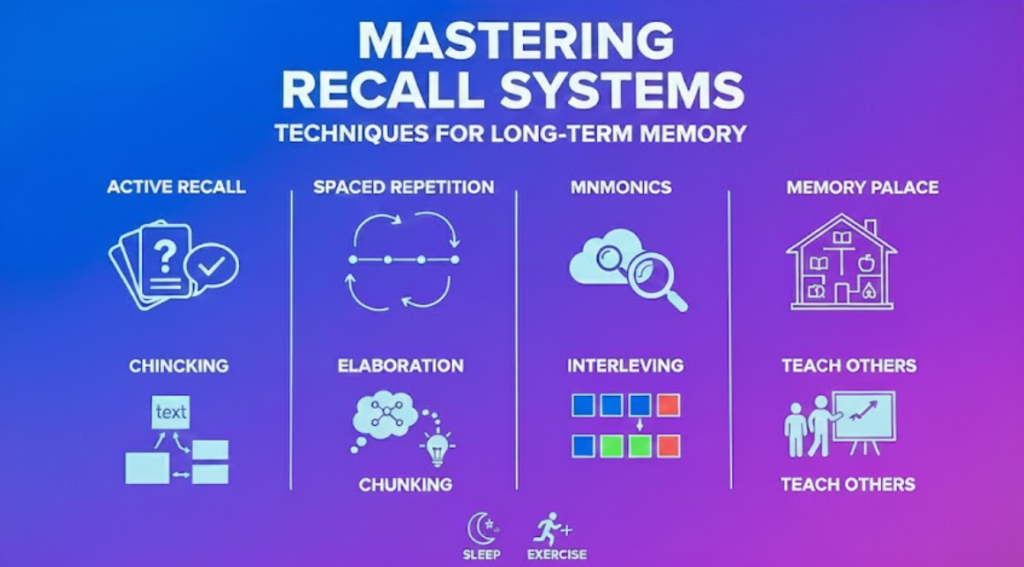
The students who succeed are not the ones who simply study harder—they are ones who learn smarter.And in 2025, the most powerful skill any student can develop is mastering recall systems. If you’re preparing for competitive exams, learning programming, entering the tech world, or exploring new career paths, the ability to recall information quickly, accurately, and under pressure will determine how fast you grow. Why Memorization Is Not Enough Traditional studying focuses heavily on memorization—reading notes again and again until something “sticks.”But research shows that passive memorization is one of the slowest and least effective learning methods. Students today are expected to handle: This is where memorization collapses—and recall systems rise. What Are Recall Systems? Recall systems are structured techniques designed to help you retrieve information exactly when you need it.Instead of stuffing your brain with data, recall systems train your brain to access that data effortlessly. Some popular recall systems include: ✔ Spaced Repetition (SRS) Learning in repeated intervals to increase long-term memory. ✔ Active Recall Testing yourself instead of rereading your notes. ✔ Blurting Method Forcing your brain to recall everything you know about a topic before checking the answers. ✔ Feynman Technique Explaining concepts in simple language to identify gaps in understanding. ✔ Mind Mapping Techniques Visually organizing concepts for faster retention. These techniques aren’t new—but in 2025, they’ve become non-negotiable. Why Recall Systems Are the #1 Skill of 2025 1. accelerate learning speed Students who practice recall learn 2x–5x faster because the brain is optimized for retrieving information, not memorizing it. 2. improve long-term retention Memorized material fades within weeks.Recalled material stays for months—or even years. 3. enhance problem-solving abilities Whether it’s coding, maths, finance, or science, quick recall allows you to apply knowledge instantly. 4. boosts career performance Employers value candidates who think clearly, respond fast, and adapt quickly.Recall = confidence + clarity. 5. make learning enjoyable and stress-free No more cramming.No more forgetting.No more exam panic. How Students Can Start Using Recall Systems Today Here’s a simple 15-minute daily routine that works for any subject: Step 1: Review the topic (2 minutes) Revise the notes—not in detail. Step 2: Hide everything and practice Recall (8 minutes) Write down everything you remember don’t check the notes until you’re done. Step 3: Test yourself with quick questions (3 minutes) Use quiz apps or internet to get questions. Step 4: Spaced repetition schedule (2 minutes) Revise again in 1 day → 3 days → 7 days → 20 days. This small routine can change your learning speed permanently. The Future Belongs to Learners Who Retain More In 2025 and beyond, intelligence isn’t defined by how much you can memorize—it’s defined by how much you can recall when it matters. Students who master recall systems will:

The #1 Skill Students Must Learn in 2025: Mastering Recall Systems Read More »

Latest Technologies

The Future Is Shaped by New Tech: 2025 Technology isn’t just moving fast anymore. It’s in a sprint. Every day, something new appears and suddenly the world looks different. From quantum computing to impressive advances in AI 2025 has become a showcase for exciting ideas that actually work. If you care about tech or write code or want your business to survive the next big wave you must stay on top of this stuff. If you miss a beat you’re already behind. 1. Artificial Intelligence & Machine Learning AI continues to lead in technological innovation with AI systems. Businesses are automating complex tasks. Use Case: Generative AI is expanding into video , code generation and 3D modeling . Revolutionizing content creation and product design. 2. Cloud Computing & Edge Computing Cloud technology has become the foundation of modern IT infrastructure. It enables scalability & flexibility and remote collaboration. However, Edge Computing is the next big thing which brings data processing closer to devices and reducing latency also enhancing performance for IoT and real-time systems. Platforms:AWS, Microsoft Azure, Google Cloud, IBM Cloud etc. 3. Quantum Computing Quantum Computing progressing toward real-world application where computers can solve problems that are practically impossible for classical systems. Uses: Companies like IBM, Google and D-Wave are racing to build stable & scalable quantum systems which make this one of the most exciting tech innovation. 4. Internet of Things (IoT) IoT connects everyday devices like smart home appliances to industrial machines with internet and it enables seamless communication and automation. Used In: 5. Blockchain and Web 3.0 Blockchain is transforming the internet by enabling transparent and secure transactions . Web 3.0 is next evolution of internet. Used in: 6. Biotechnology & Health Tech Technology is empowering healthcare through innovation in diagnostics treatment and patient care. Uses: 7. Autonomous and Electric Vehicles Automotive industry is experiencing a revolution with self-driving technology and electric power. Companies like Tesla and Waymo are pushing the limits of innovation. Used for: 8. Augmented Reality (AR) and Virtual Reality (VR) AR and VR are redefining digital experiences from immersive gaming to virtual workspaces. Used In-

Latest Technologies Read More »

Stock market

Mastering the Stock Market: A Beginner’s Guide to Smart Investing Stock market has always been one of the most powerful ways to build wealth. From tech startups to multinational companies investing in right stocks can open doors to financial independence. But before diving in, it is important to understand how the market works and how to make informed decisions. What is Stock Market? Stock market is a platform where investors buy and sell shares. They buy/sell shares of publicly listed companies. When you buy a share you own a small part of that company. If company grows and profits your investment grows too. It’s that simple but mastering can takes knowledge and patience. How the Stock Market Works The stock market operates through exchanges like the National Stock Exchange and Bombay Stock Exchange. Companies list their shares through an IPO and after that shares are traded daily among investors. Stock prices fluctuate based on factors like: Understanding these factors is important to predicting and managing market movements. Types of Investors There are mainly two kinds of investors: Both approaches can be profitable when backed by strategy and proper risk management. Strategies for Smart Investing Benefits of Investing in the Stock Market Risks You Should Know Every investment carries risk. In stock market prices may drop unexpectedly. Always invest an amount you can afford to risk and stay updated with market trends. Remember The stock market is not a gamble , it’s a calculated path to financial freedom when done right. Whether you’re starting small or planning to grow a strong portfolio, every investor begins with a single step. Stay curious, stay consistent and let your money work for you. Related Courses Explore our courses on Stock Market Fundamentals, Smart Investing Strategies and Financial Analysis — start your journey toward becoming a confident investor today at dirb.in.

Stock market Read More »

WEb development

The Real Deal About Web Development in 2025: What Nobody Tells You I’ve been building websites for years now and we can tell you one thing for sure that web development today is nothing like it was even five years ago. Everyone’s talking about AI, no-code platforms and how anyone can build a website these days. But here’s the truth – it’s both simpler and more complicated than ever. Let me break down what’s actually happening in this space right now. The Landscape Has Shifted Dramatically When I started, you basically had two options- hire someone expensive or learn HTML, CSS and JavaScript from scratch. Both were painful. Now? There are literally hundreds of tools, frameworks and platforms that promise to make it easy. And honestly some of them actually deliver. But that’s also created this weird situation where everyone thinks they can be a web developer because they used a drag-and-drop builder. Don’t get me wrong – tools like Webflow, Elementor, and WordPress have democratized web development in a genuinely good way. Small businesses and entrepreneurs can actually have professional sites without dropping thousands on a developer. That’s huge. But there’s a flip side. When something breaks, when you need custom functionality, when your site starts slowing down under real traffic – that’s where things get messy fast. I’ve seen so many businesses get burnt because they built their entire operation on a “simple” no-code platform, only to realize too late that it couldn’t scale or do what they actually needed. What the Real Demand Actually Looks Like Here’s something that surprises people: there’s never been more demand for skilled web developers. You’d think with all these no-code tools, we’d be obsolete by now. Instead, companies are desperately looking for people who can actually code, who understand databases and APIs and server architecture. The high-end market – the stuff that pays really well – is busier than ever. The middle market is where things are getting squeezed though. A lot of straightforward website work – basic brochure sites, simple e-commerce setups – that’s moving to no-code platforms and freelancers using WordPress + Elementor. I’m not even mad about it. Some projects genuinely don’t need a custom built solution. What’s happening is a polarization. You’ve got the ultra-high-end work – complex applications, specialized tools, enterprise systems – where developers command premium rates. And you’ve got the mass market of simple sites handled by no-code tools and templates. The middle ground is getting thinner every year. The Tech Stack Wars Are Real If you’re learning web development right now, you’ve probably already heard the arguments. React vs Vue vs Angular. Next.js vs Remix. Should you learn Python or Node.js for the backend? And don’t even get me started on the CSS debates. Here’s my honest take: it doesn’t matter nearly as much as people pretend it does. I’ve built successful projects with boring old tech stacks and failed projects with cutting-edge frameworks. What matters is whether you understand the fundamentals – HTTP, databases, how servers work, the basics of security. That said, React has won the frontend war. I didn’t like it for years, but you can’t ignore the momentum. If you’re starting out and you want the best job prospects, learning React is probably the smart move. For backend, Node.js and Python are both solid. Python’s easier to learn but might be overkill for web development specifically. The real issue is that everyone’s chasing the newest, shiniest framework and it creates this treadmill where you’re constantly learning new things that might be outdated in two years. I’ve started focusing less on specific frameworks and more on understanding the underlying principles. That stuff doesn’t change. What Actually Makes a Good Website in 2025 You know what’s wild? We’ve somehow made websites slower while computers got faster. A site that loads in under a second used to be normal. Now, if your site loads in three seconds, you’re doing pretty well. We’ve added so much JavaScript, so many third-party scripts, so much tracking, that the average website is bloated as hell. Performance matters more than it ever has. Google cares about it. Users definitely care about it. And yet, I see way too many developers who treat performance as an afterthought. “We’ll optimize later” – yeah, you won’t. Mobile-first design isn’t new anymore but it’s still not universal. Some businesses still treat mobile as an afterthought, and it shows. Mobile traffic makes up the majority of web traffic now. If your site doesn’t work great on phones, you’re losing customers and period. Accessibility is another area where I see a disconnect. A lot of developers treat it like a box to tick rather than something that genuinely matters. But making your site accessible isn’t just about helping people with disabilities though that’s important. it’s about building a better site for everyone. Better keyboard navigation helps power users. Clear semantic HTML helps search engines and assistants. Good contrast helps people reading in bright sunlight.

WEb development Read More »

Ethical Hacking

Ethical Hacking: What Nobody Really Talks About Lemme be straight with you – ethical hacking sits in this weird gray zone where most people don’t actually understand what it means. Your mom probably thinks it’s all sketchy dudes in hoodies doing illegal stuff. Your corporate security team might think it’s magic. Reality? Way different. I’ve spent enough time in cybersecurity trenches knowing that ethical hackers occupy a peculiar niche. We break into systems. Legally. We steal data. With permission. We find vulnerabilities before bad actors do and get paid for it. Still sounds shady when you describe it like that huh? Why Companies Actually Want Someone Breaking Into Their Stuff Here’s something most people miss: companies are terrified. Not of ethical hackers. No. They’re absolutely petrified of the black hat hackers who’ll hold their data ransom or sell customer info on dark web marketplaces. So what do they do? They hire ethical hackers to find problems first. Think of it like hiring someone breaking into your house intentionally. Sounds bonkers but makes perfect sense strategically. You’d rather discover your locks suck from a friendly penetration tester than from actual criminals. Prevention beats dealing with aftermath. Companies spend millions on firewalls and fancy security software then realize nobody actually tests whether these systems work. You can install expensive locks but if the window’s wide open nobody notices until something gets stolen. The Mindset Matters More Than Skills Learning Python or Metasploit or whatever hacking tool seems exciting when you’re starting out. Most beginners think learning tools equals becoming ethical hacker. Wrong. Dead wrong actually. Ethical hacking demands particular thinking patterns. You need curiosity that borders on obsession. You need patience because sometimes finding vulnerability takes weeks of exploring. You need humility because systems constantly surprise you with weird exploits you never anticipated. Most importantly you need respect for boundaries and laws. That separates ethical hackers from criminals fundamentally. One works within rules; other breaks them for personal gain. Easy distinction in theory. Fuzzy in practice sometimes. I’ve met talented hackers who lacked ethical foundations. They’d find incredible vulnerabilities then sell them illegally instead of reporting responsibly. Money talks louder than morality for some people I guess. The Actual Work Looks Nothing Like Movies Hollywood portrays hacking as dramatic keyboard frantically typing with green code cascading then boom access granted. Real ethical hacking involves spreadsheets, documentation, coffee cold and forgotten on desks and a lot of dead ends. You’ll spend three hours discovering basic network architecture of client systems. Then maybe find that employees use dictionary words as passwords. Or executives store credentials in plaintext documents on shared drives. Thrilling stuff right? Not exactly cinematic. Physical penetration testing actually involves dumpster diving for discarded documents or social engineering some poor receptionist into revealing sensitive info. Nothing high-tech about rifling through trash honestly. Sometimes vulnerabilities hide in weird places like unpatched printers or USB ports left accessible or default passwords never changed since installation. Finding something isn’t about fancy techniques; it’s about being thorough and observant and methodical beyond belief. Security Theater vs Actual Security Most organizations practice security theater religiously. They buy expensive tools and implement policies that sound good in meetings but don’t address real problems. I walked into one company with million-dollar firewalls where employees shared login credentials via email because the system annoyed them. Another organization had such complicated password requirements that workers wrote them on sticky notes under keyboards. That defeats everything obviously. Corporate leadership wants feeling secure more than being secure sometimes. They want checkbox compliance. They want audits passing. They want ability saying “we hired security consultants” without actually fixing underlying issues that consultants identified. Ethical hackers become frustrated because fixing security means changing culture and habits and investing in proper training. That’s harder than buying another firewall. The Certification Circus CompTIA Security+, Certified Ethical Hacker, Offensive Security Certified Professional – certifications flood cybersecurity landscape like leaves in autumn. Everyone talks about getting them. Most people overestimate their value dramatically. Certifications matter for resumes and corporate requirements and certain government contracts. They validate basic knowledge hopefully. But they don’t make anyone magically competent at hacking. I’ve met certified professionals who couldn’t find vulnerability in obviously broken system. I’ve met uncertified folks who discovered exploits affecting thousands of computers. Practical skills beat credentials consistently. Building labs and practicing on vulnerable systems and actually doing stuff matters infinitely more than exam passing. Yet hiring managers rely on certifications because evaluating actual competence proves difficult. What certification does do: proves you knew something on particular date when you passed exam. Whether you retained that knowledge or whether you can actually apply it practically? Different ballgame entirely my friend. The Legal Minefield Lurking Underneath This aspect separates ethical hacking from criminal hacking completely. Ethical hackers operate under explicit written authorization. That authorization matters legally. Without it you’re committing federal crimes even if intentions seem pure. I’ve known incredibly smart people who went to prison for hacking despite claiming they meant well. Intent doesn’t matter legally. Authorization does. Everything does. Your contract must clearly spell out scope. What systems can you touch? What methods are permitted? How far can you go? Gray areas become legal nightmares fast. I always get everything in writing by multiple stakeholders because miscommunication causes career-ending problems sometimes. Even with authorization certain methods cross legal lines. Accessing data beyond scope violates laws. Selling findings instead of reporting creates liability. Accidentally damaging client systems during testing opens lawsuit opportunities. Cybersecurity law remains messy and evolving rapidly which makes things tricky. Money and Positioning Ethical hackers who know their value earn serious money. Penetration testing engagements run tens of thousands to hundreds of thousands depending on scope and complexity. Bug bounty hunters discover vulnerabilities and earn payouts anywhere from fifty bucks to fifty thousand per bug sometimes more. But entry-level salaries suck compared to money later on. You’ll start making less than you’d expect probably. Years of study, certifications, building portfolio projects and you finally land gig paying

Ethical Hacking Read More »

Forex trading

Forex Trading: The Game Everyone Thinks They Can Win Listen I’m gonna tell you something harsh right now. Ninety-five percent of people trading forex lose money. That statistic isn’t exaggerated or pessimistic—it’s just math. Yet somehow thousands of new traders jump in monthly convinced they’ll beat odds everyone else faces. Forex trading sits somewhere between legitimate investing and glorified gambling honestly. Media portrays it as fast money. Reality proves different. Much different. Why Forex Attracts Dreamers and Destroys Them Currency markets move constantly. Billions flow through daily. That liquidity means you can enter and exit positions easily unlike some illiquid markets where getting out proves nightmarish. Sounds great right? That accessibility becomes trap though. Because easy entry plus leverage plus emotional decision-making equals financial wreckage typically. A beginner opens account with thousand dollars. Broker offers fifty to one leverage. Suddenly they control fifty thousand dollars worth trading power. One bad trade wiping entire account becomes reality faster than breathing. I’ve watched friends lose months of savings in hours literally. Brokers push leverage aggressively because their profits come from volume and spread. They don’t care whether you win or lose. They profit either way. That misalignment incentivizes them encouraging risky behavior subtly through marketing and platform design making everything feel accessible and simple. The Seductive Mathematics of False Hope Someone tells you they made forty percent return last month forex trading and suddenly your brain lights up. But they conveniently forget mentioning months losing money or that one lucky spike they caught accidentally. Survivorship bias rules forex spaces online. Everyone broadcasting wins online. Losers stay quiet obviously. So you see endless testimonials from winners creating illusion that consistent profits flow naturally. They don’t. Not even slightly. Markets have patterns sometimes. Definitely. Technical analysis works occasionally. Sometimes though. Randomness plays bigger role than traders admit acknowledging. Coin flips produce similar results compared to many trading strategies honestly. Yet people spend thousands learning chart patterns believing they’ve discovered holy grail. The mathematics shows that consistent profits require edge. Real edge. Something giving you advantage repeatedly. Most traders lacking that discover too late that randomness eventually catches up. Trading Psychology: Where Real Battles Happen Here’s what nobody teaches in forex courses: the enemy isn’t markets. The enemy lives between your ears. Fear grips you when trades go wrong. Greed overtakes reason when wins happen. Ego refuses accepting losses so you double down desperately. Emotional trading destroys accounts methodically and reliably. I knew trader making solid returns then ego convinced him his system was unbeatable. Suddenly he increased position sizes dramatically. Markets shifted slightly and boom—wiped out months of profits in single session. Happens constantly actually. Successful traders develop emotional discipline through years grinding through losses and wins. They follow rules religiously even when instinct screams doing something else. They accept losses as cost of trading rather than personal failures requiring revenge trading afterward. Most beginners lack that maturity. They trade like they’re playing poker with friends where emotions run high and rationality takes backseat. That’s poison in forex markets. The Technical vs Fundamental Debate Some traders swear technical analysis works perfectly. Charts tell everything supposedly. Support and resistance levels predict price movements reliably according to them. Candlestick patterns reveal future direction supposedly. Other traders insist fundamentals matter only. Interest rates. Economic data. Geopolitical events. These drive currency values ultimately they claim. Technical traders reading charts waste time basically. Truth? Both camps contain partial wisdom and massive blind spots. Markets respond sometimes to technical levels and sometimes ignore them completely. Fundamentals matter except when they suddenly don’t. News shocks markets occasionally while sometimes big announcements produce little movement oddly. Combining approaches works better than religious adherence to single methodology. But even combined approaches fail regularly because markets contain randomness inherent and unpredictability fundamental to their nature sometimes. Risk Management: The Thing Everyone Ignores Proper risk management separates traders lasting decades from traders wiping accounts in months. It’s unsexy though. Nobody gets excited about position sizing and stop losses and risk reward ratios. Yet following these principles religiously determines whether you survive market volatility or explode spectacularly. Risk one to two percent per trade. Use stops consistently. Don’t risk amount you can’t afford losing completely. These rules sound boring and obvious until markets prove otherwise then you wish following them religiously. Discipline here matters infinitely more than finding perfect entry points. Perfect entries combined with poor risk management destroys accounts. Mediocre entries combined with excellent risk management builds wealth steadily. That imbalance shocks most beginners honestly.

Forex trading Read More »

Generative AI

Generative AI: The Tool Everyone Misunderstands Completely Gen AI is everywhere now. ChatGPT broke records. Everyone’s using it. Yet most people fundamentally misunderstand what these systems actually do and what they can’t. AI generates text by predicting next word based on patterns learned from training data. That’s literally it fundamentally. Sounds simple because it is technically. Marketing departments made it sound magical though which causes problems. Why Hype Exceeds Reality Dramatically Tech companies benefit from hysteria surrounding AI obviously. Stock prices jump when CEOs mention artificial intelligence. Media loves existential dread narratives. So suddenly AI will replace everyone and solve cancer and achieve consciousness simultaneously according breathless reporting. Reality proves messier. AI tools help with writing and coding and analysis. They hallucinate confidently. They fail at reasoning and logic consistently. They reproduce biases from training data faithfully. They cost enormous money running at scale. ChatGPT sometimes gives completely wrong information with absolute confidence. That bothers people rightfully. It should. Trusting AI outputs without verification remains dangerous approach absolutely. The Actual Useful Applications AI excels at specific tasks. Summarizing documents works well. Brainstorming ideas flows naturally. Writing boilerplate code generates efficiently. Explaining concepts works adequately. These applications deliver genuine value without hype distortion. Developers use AI assistants speeding up coding substantially. Writers use it generating first drafts avoiding blank page paralysis. Businesses use it automating customer service somewhat. These represent legitimate wins honestly. Where AI fails catastrophically: medical diagnosis without human verification. Legal reasoning requiring nuance. Financial advice affecting real lives. Anything requiring genuine understanding rather than pattern matching essentially. The Job Displacement Question Everyone Asks Will AI replace workers? Some jobs absolutely. Data entry roles disappear. Certain coding tasks automate. Customer service positions consolidate inevitably. That’s real and happening now. But complete job extinction looks less likely honestly. New jobs emerge alongside automation historically. However transition periods hurt people severely sometimes. That matters ethically regardless of long term employment trends. Smart workers develop skills AI can’t replicate yet. Critical thinking. Complex problem solving. Emotional intelligence. Leadership abilities. Creativity requiring genuine novelty. Specialization beats generalization increasingly. The Training Data Problem Destroying Credibility AI models trained on internet data absorb internet problems thoroughly. Bias. Discrimination. Misinformation. Factual errors. All inherited by AI systems reliably. Someone trained model on biased data then shocked when model produces biased outputs. Surprised Pikachu face situation essentially. The problem compounds because AI learns patterns so well that biases become baked in fundamentally. Companies rushing deploying AI without proper testing and auditing causes harm. Loan applications rejected unfairly. Hiring algorithms discriminating subtly. Medical recommendations skewed by demographic representation in training data. These harms are real and happening now silently mostly. The Regulation Question Looming Ahead Governments scrambling figuring out how regulating AI works practically. EU pushing strict requirements. US moving slower typically. China pursuing different approaches emphasizing control. No consensus exists about what should happen honestly. Most regulation comes too late addressing problems after they’ve caused damage already. That’s normal pattern unfortunately. Technology moves faster than policy can react historically. What should happen? Transparency about AI capabilities and limitations. Clear labeling of AI generated content. Accountability when AI systems cause harm. That requires legal frameworks we don’t possess yet unfortunately. Why Most AI “Skills” Courses Waste Your Money Someone will sell you AI mastery course for hundreds of dollars. They’ll teach prompt engineering and whatever fad exists this month. Most of this becomes obsolete quickly as AI systems improve dramatically. Real skill involves understanding machine learning fundamentals. Linear algebra. Statistics. Computer science basics. That knowledge lasts longer than specific tool tutorials do. Boring investment yielding actual returns surprisingly. Most people taking AI courses lack foundational knowledge making advanced concepts meaningless basically. They learn surface level tricks then think they’ve mastered something profound. They haven’t. The Honest Assessment Generative AI represents genuinely useful technology. It’s not magical. It’s not dangerous quite yet. It’s not solving everything despite hype suggesting otherwise. Use it appropriately. Verify outputs always. Understand limitations deeply. Don’t replace human judgment with algorithmic confidence ever. Develop skills AI amplifies rather than skills AI replaces purely. That balanced perspective beats both utopian evangelism and apocalyptic doom equally. Reality usually sits between extremes somewhere uncomfortable and nuanced and less clickable than either narrative honestly.

Generative AI Read More »